

Mohammed bin Salman's vision for a Saudi Arabia that would spearhead the global economy, attracting billions in investments and turning the desert into a symbol of luxury, technology, and power, is now confronting the harsh reality of war. Houthi missiles and drones threaten the heart of the Saudi kingdom, oil infrastructure is being transformed into targets, and Riyadh's grand ambitions are tested on the battlefield. Indicative, moreover, is the assessment that Saudi Arabia cannot defend its entire airspace and that many of its energy infrastructure facilities and installations are... vulnerable. Behind the renewed flare-up in Yemen emerges a sequence of strategic missteps: the rupture with the United Arab Emirates, the underestimation of the Houthis' military strength, and above all, the overestimation of Donald Trump's willingness to defend Washington's most important Arab ally. The result is a dangerous geopolitical stalemate: the Saudi crown prince, who sought to distance his country from regional conflicts to build its economic future, now risks seeing that future dictated by a war he believed he could leave behind.
Deep crisis
Mohammed bin Salman, crown prince of Saudi Arabia, aspired to transform his country into an international hub for investment and tourism, as well as a host for the world's largest sporting events. Today, however, unmanned aerial vehicles and missiles launched from Yemen are striking Saudi cities, dragging the country ever deeper into a regional crisis from which the crown prince hoped to remain aloof. The civil war in Yemen reignited this summer and escalated last month, ending a period of several years of relative calm. Over the past 11 years, Saudi Arabia has attempted, through both military and diplomatic means, to contain conflicts on its southern border. It initially fought against the Houthis, subsequently pursued peace negotiations with them, and restored diplomatic relations with Tehran.
Miscalculations
However, according to experts, a series of erroneous calculations left Riyadh vulnerable to a new cycle of conflict. Late last year, Saudi Arabia terminated its long-standing partnership with the United Arab Emirates due to disagreements arising from Abu Dhabi's support for a rival armed force in Yemen. Concurrently, Riyadh overestimated Donald Trump's willingness to offer support to Saudi Arabia. These developments occur during a period when multi-directional attacks on oil infrastructure have disrupted Saudi exports, led to the cancellation or postponement of major projects, and exerted significant pressure on Mohammed bin Salman's economic plans. According to Saudi officials, Houthi attacks against several of the country's airports this week resulted in the deaths of at least 13 people, including a Saudi pilot. Michael Ratney, former United States ambassador to Saudi Arabia, told CNN: "All they wanted was to keep the conflict as far away from Saudi Arabia as possible and prevent the Houthis from disrupting the country's transformation plans. Now, however, they find themselves at the center of the crisis."
The hasty withdrawal of the United Arab Emirates
Saudi Arabia's airstrike last year against a shipment of military vehicles sent by the United Arab Emirates to support the separatist forces of the Southern Transitional Council shattered the two countries' decade-long alliance. Following the departure of Emirati forces, Saudi Arabia was forced to face the consequences of the crisis alone. According to a southern Yemeni official, the UAE's withdrawal created a vacuum in the command of forces that had operated for years under Abu Dhabi's guidance. He underscored that the transfer of responsibilities to Saudi Arabia was not carried out smoothly and that Riyadh failed to ensure the same level of coordination and command.
Inadequate preparation against the Houthis
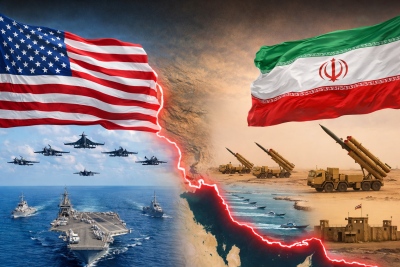
Eight weeks after the UAE's withdrawal, the war launched by the United States and Israel against Iran broke out. These developments plunged the region into a broader crisis, exposing Saudi Arabia to Iranian attacks as well. In July, Iran dispatched a civil aircraft to transport a Houthi delegation. Saudi Arabia, seeking to prevent the aircraft from landing at Sanaa airport, which is controlled by the Houthis, launched an attack against the airport. In response, the Houthis announced the termination of the ceasefire, decided to impose a naval blockade on Saudi vessels, and initiated a rapid military operation along the Yemeni coast. Subsequently, Houthi attacks against Saudi oil installations and pipelines disrupted crude oil transport and caused prices to rise. Saudi forces responded by carrying out hundreds of airstrikes. Ahmed Nagi, senior analyst for Yemen at the International Crisis Group, stated that Saudi Arabia was unprepared for the Houthi offensive and had failed to secure necessary coordination with allied forces in Yemen. He added that the Houthis' advance has undermined the morale of Riyadh's allies, while the organization's advanced weapon systems now threaten more Saudi cities.
Donald Trump: An unpredictable ally
According to experts, over-reliance on American support constituted yet another miscalculation by Saudi Arabia. Despite signing a new defense agreement with Washington, Riyadh remains anxious over diminishing American commitment regarding its security. According to CNN, Mohammed bin Salman spoke twice with Donald Trump last month, asking him to launch strikes against the Houthis. However, the American president refused to intervene. Instead, Washington conducted negotiations with the Houthis in Oman, aiming to preserve the ceasefire it had previously concluded with the organization. Michael Ratney assesses that the Saudi military structured its forces based on cooperation with the United States and was not designed to independently conduct offensive operations of this nature. According to him, the unpredictable character of Donald Trump's decisions has reinforced the sense in Riyadh that it stands alone against threats. In response, Saudi Arabia has broadened cooperation with Egypt, France, Britain, Turkey, and Pakistan. Concurrently, more than 100 American military advisors have been deployed to Saudi Arabia with a mandate to provide intelligence and assist in target identification.
A regional solution remains distant
Experts warn that external support and initial military successes by Yemeni government forces are insufficient on their own to bring the war to an end. Disagreements among armed factions, as well as the absence of a clear plan for Yemen's political future, continue to pose significant obstacles. According to analysts, as long as the war between the United States and Iran continues, Tehran will retain a strong incentive to leverage the Houthis' military capabilities to exert pressure on Saudi Arabia. A diplomatic settlement between Persian Gulf states and Iran or, alternatively, an escalation of military strikes against the Houthis rank among potential scenarios for the upcoming period. However, none of these guarantees an end to the war in Yemen in the immediate future. Saudi Arabia is now compelled to seek a difficult and inevitably imperfect exit from the crisis, which casts doubt upon both Mohammed bin Salman's regional ambitions and his economic plans.
The message of the Emir of Qatar
The Emir of Qatar, Sheikh Tamim bin Hamad Al Thani, underscored that attacks against liquefied natural gas (LNG) facilities have severely impacted the country's production capacity and inflicted immediate consequences on its economy. Concurrently, he warned that "henceforth we must not operate as we operated prior to this crisis." This message is expected to be received with utmost seriousness by both members of the Shura Council and the heads of state institutions. As he noted, the state budget for coming years will be influenced by the events of the past year.
The Emir delivered a clear message, both directly and indirectly: Qatar intends to pivot more toward economic sectors unrelated to hydrocarbons. He specifically referenced tourism and hospitality, the real estate market, the further development of the private sector and other commercial activities, as well as the enhancement of agriculture, domestic stability, and food security. From his speech, it became evident that he recognizes how the war, which has now reached the doorstep of Arab nations, has generated severe economic repercussions for Qatar. He urged greater fiscal prudence in managing state expenditures while maintaining an optimistic tone and expressing strong conviction that the country possesses the resilience required to overcome the crisis.
Diplomacy as a primary choice
Addressing the attacks launched against the country by Iran, the Emir characterized them as a blatant violation of national sovereignty and the principles of good neighborliness. As he emphasized, despite the ongoing war, the country must remain stable and prepared, utilizing the capabilities of its security mechanisms to confront and surmount crises. He also expressed gratitude toward Qatar's security forces and armed forces.
The emir reiterated that the country remains committed to negotiations without implying it will make concessions on national security matters. In doing so, he reaffirmed the enduring guideline of Qatar's foreign policy: priority given to security, while simultaneously maintaining the capability and will to negotiate with all involved parties. He underscored that diplomacy consistently represents a preferable choice over conflict. However, he warned that ongoing attacks against Gulf Cooperation Council (GCC) countries demonstrate that aggression remains a grave problem demanding a collective response. He reiterated, in fact, the principle that an attack against any GCC nation constitutes an attack against all.
Strategy built on 4 foundational elements
During his address, Al Thani presented the core pillars of the country's security and foreign relations policy amid a period of intense regional instability. Addressing national strategy, he stated: "Our strategy was based on four foundational elements, the first of which is the decisive defense of the homeland without being dragged into war." Reaffirming Qatar's commitment to diplomacy, he clarified that dedication to peace must not be construed as a sign of weakness. "Our commitment to dialogue and peaceful solutions does not mean leniency when it comes to defending our country," he underscored. Addressing broader security challenges in the Middle East and East Africa, he reiterated Qatar's active diplomatic participation. "We affirm our steadfast positions in favor of finding solutions to regional crises in Sudan, Libya, Yemen, and Somalia," he stated.
During the annual session of the Shura Council, Al Thani called for intensified efforts to protect maritime routes and the region's critical supply networks. Underscoring the importance of maritime security and regional stability, he declared: "Efforts must be doubled to safeguard navigation in the Persian Gulf and the Strait of Hormuz, as well as to protect energy installations and civilian infrastructure." As he said, "the security of Gulf Cooperation Council member states and the preservation of their sovereignty are matters admitting no compromise," stressing that his country will emerge from the current crisis more flexible and better adapted to global shifts. Concurrently, he highlighted Qatar's central role in the global energy market. "Qatar represents nearly one-fifth of the global liquefied natural gas trade, and anything impacting it reflects on markets and consumers," the Emir noted.
Rashid al-Mohanadi (analyst): Qatar's strong defense capability elevated it to a key diplomatic mediator
Qatar's capacity to defend itself during the US-Israel war against Iran enabled the country to maintain a decisive diplomatic role in efforts to bring warring parties to the negotiating table. This was argued in an interview with Al Jazeera by Rashid al-Mohanadi, vice president of the Center for International Policy Research, who pointed out that Qatar's military resilience served as a fundamental prerequisite for its diplomatic influence. "If Qatar had not managed to defend itself in the manner it did, it would not have subsequently evolved into one of the most important diplomatic actors facilitating the resolution of this conflict," he characteristically stated. The security analyst explained that Qatar's national security policy rests upon three core pillars: diplomacy, military capabilities, and international partnerships.
According to him, these strategic partnerships encompass Gulf Cooperation Council countries, the US, the UK, Turkey, and NATO. Al-Mohanadi also underscored that one of the most significant traits of any effective mediator is persistence and resilience in the face of adversity. "One of the most important characteristics of any mediator is persistence," he stressed, adding that Qatar remains open to establishing a new regional security framework. Concluding, he clarified that despite the importance of diplomatic mediation, ultimate responsibility for achieving an agreement rests with the warring parties themselves. "In the end, the mediator can facilitate the process. But the two opposing parties must sit together at the table," the analyst concluded.
www.bankingnews.gr







Σχόλια αναγνωστών